
This page may take a moment to load

Chris Herrington, Contributing Writer
Pleading the 5th and What That Really Means/420
We have all been led to believe that faced with telling the truth about our guilt or our remaining silent about it, we have the option of “pleading the 5th.” This reading of the United States Constitutional 5th Amendment is, I believe, erroneous.
Let’s examine the text and the context of the document and reframe, for the sake of the argument, the perhaps better reading, one that makes the court powerful enough to create a more substantial use of our judicial branch of government. Here is the text:
No person shall be held to answer for a capital, or otherwise infamous crime, unless on a presentment or indictment of a Grand Jury, except in cases arising in the land or naval forces, or in the Militia, when in actual service in time of War or public danger; nor shall any person be subject for the same offense to be twice put in jeopardy of life or limb; nor shall be compelled in any criminal case to be a witness against himself, nor be deprived of life, liberty, or property, without due process of law; nor shall private property be taken for public use, without just compensation.
http://en.wikipedia.org/wiki/Fifth_Amendment_to_the_United_States_Constitution
I would further like to break the text at the adjoining semi-colons so that it graphically appears like this for our study:
No person shall be held to answer for a capital, or otherwise infamous crime, unless on a presentment or indictment of a Grand Jury, except in cases arising in the land or naval forces, or in the Militia, when in actual service in time of War or public danger;
nor shall any person be subject for the same offense to be twice put in jeopardy of life or limb;
nor shall be compelled in any criminal case to be a witness against himself, nor be deprived of life, liberty, or property, without due process of law;
nor shall private property be taken for public use, without just compensation.
We have here then 4 sections:
1. No person shall be held to answer for a capital, or otherwise infamous crime, unless on a presentment or indictment of a Grand Jury, except in cases arising in the land or naval forces, or in the Militia, when in actual service in time of War or public danger;
2. nor shall any person be subject for the same offense to be twice put in jeopardy of life or limb;
3. nor shall be compelled in any criminal case to be a witness against himself, nor be deprived of life, liberty, or property, without due process of law;
4. nor shall private property be taken for public use, without just compensation.
I would further like to section out the 3rd part, having to do with “pleading the 5th.”
3. nor shall be compelled in any criminal case to be a witness against himself, nor be deprived of life, liberty, or property, without due process of law;
I would further like to take that section and hold it up to scrutiny for objectification by delineating the sub-sections within it by using the graphic filter of seeing each part as impinging on the rest, concepts relating to concepts, as in:
3. nor shall (he) be compelled
…………….in any criminal case
…………….to be a witness
…………….against himself,
…nor (shall he) be deprived
…………….of life, liberty, or property,
……………………………………………………………….without due process of law;
And so I would like to reread the text, taking the prepositional stance that “due process” is in fact a requisite for not only being deprived, but is also consequentially prerequisite for our being compelled to witness against ourselves on the stand, completing the circle of his testimony that he either confesses or perjures himself, in which case he is lending the need for further investigation and evidence gathering. Having entered a plea, he has already perjured himself if he is guilty. Certainly this is the stance of any interrogation, that the accused be asked to tell the truth, but that the interrogation is to proceed until either a confession is made or until substantial enough evidence is brought to bear against him. It seems odd that the Founders would simply create a loop hole that would allow the accused to simply wait out the trial to see if the investigators are in fact smart enough to catch the criminal they hold; the concept seems to be one of following the law, not forestalling the law.
The text might then be read as follows in a more comprehensive rendition:
3. nor shall be compelled in any criminal case to be a witness against himself, (nor be deprived of life, liberty, or property,) without due process of law;
Or better yet:
3. nor shall be compelled in any criminal case to be a witness against himself without due process of law, nor be deprived of life, liberty, or property, without due process of law;
My graphics have been built around the substance that the clause, “nor be deprived of life, liberty, or property,” merely adds to the previous item, interrupting the flow of the sentence, in order to be contained in the list of two items that would require due process to be followed. Certainly, once due process is followed, the taking of life, liberty, or property is small in comparison to one’s having to tell the truth about what one has done, or at the very least making a claim or commitment concerning evidence within the trial process.
There have been many cases where pleading the 5th has led to the accused’s being able to merely look their victims and accusers right in the eyes and silently pass by without having to be seen as the monsters they are. That this has happened is a crime in and of itself, a wrong to the system and the people as the ones correspondently under that system.
For those rely on the 5th to skate by without owning up to their actions, who have plausible deniability on their side, they should not be allowed to remain silent; the rest of us await their honesty, and if that is not forthcoming, then they should at least be asked straightforwardly if they are guilty and of the evidence that would lead to their conviction. If due process is the end all and be all of the American judicial system, then it cannot be trumped by some lame excuse like, “I don’t want to look bad or guilty.” Perhaps I am naive about such things, not being a lawyer myself. I am no judge, and have never served on a jury. I have never served in the military. I am simply an American citizen asking the question, “Once we have followed due process, why can’t we compel those who are accused to make an accounting of themselves?” This would not force a confession, but it would force the accused to take a stand, that, yes, might later be used against him.
runningturtle87

Graveside Service for Mae Deanne Blake, 80, will be Friday, April 27, 2012, at 10:00 at Sunset Memorial Park.
Mae Deanne died on Tuesday, April 24, 2012, in Nacogdoches. She was born September 14, 1931.
Condolences may be offered at www.casonmonk-metcalf.com.
Cason Monk-Metcalf Funeral Directors.
Services for Lloyd Hulon Mills, 87, of Nacogdoches will be held at 10:30 a.m. Saturday, April 28, at Cason Monk-Metcalf Sunset Chapel, Nacogdoches, with Mr. H.A. “Buster” Dobbs officiating. Interment will follow at Libby Cemetery in Nacogdoches County.
Mr. Mills was born May 16, 1924, in Nacogdoches County and passed away April 23, 2012, at a local hospital.
Visitation will be held Saturday, April 28, from 9:30 a.m. until service time.
Services are under the direction of Cason Monk-Metcalf Funeral Directors, Nacogdoches. www.casonmonk-metcalf.com

Jason Bridges, Pct. 4 Constable
The Nacogdoches County Constable Office Precinct 4 has arrested a Corrigan man for burglary of a habitation. Constable Bridges stated that his office has been conducting an ongoing investigation into a burglary that occurred in Etoile, Texas on February 25, 2012.

Constable Jason Bridges stated that his office was able to link the suspect to the burglary by various long distance phone calls that were made from the victim’s house. Bridges stated that he believes the suspect may have entered the residence more than once and made various long distance phone calls once inside the residence. Various items were also taken from the residence.
Bridges stated that through phone records, we were able to track those phone calls down to different residences in Corrigan, Texas. Through further investigation the constable office was able to directly identify the suspect and a warrant was obtained for his arrest.
During the course of the investigation Constable Bridges stated that the suspect was arrested by the Polk County Sheriff Office on March 2, 2012 for a probation violation for the offense of Burglary.
Constable Bridges stated that charges were filed on Anthony Wayne Jones 24 years of age from Corrigan, Texas. A hold was placed on Jones at the Polk County Jail for Burglary of a Habitation 2nd Felony. Bridges stated that Jones will be transported back to Nacogdoches County when he is released on the probation violation charges that occurred in Polk County. The constable Office is also investigating several other prowler calls that have occurred in the Morgan Cove area during that time in February 2012 that Jones is also a suspect in. Bridges stated that more charges may follow.
Click the report to make it larger



This is the report from the Nacogdoches County Sheriff’s Office that list the reports from 6 a.m. of the previous day to 6 a.m. of the listed day.

This page may take a moment to load

This is a complete list of reports responded to by the Nacogdoches Police Department
This page may take a moment to load
This is the report from the Nacogdoches County Jail that lists the arrests made from 6 a.m. of the previous day to 6 a.m. of the listed day.
This page may take a moment to load

The upcoming Stephen F. Austin State University Regents Lecture by Dr. Jimmie Yeiser, director of the Forest Resources Institute and holder of the T.L.L. Temple Chair in the Arthur Temple College of Forestry and Agriculture, will focus on Texas’ invasive plant and animal species and their impact on ecosystems.
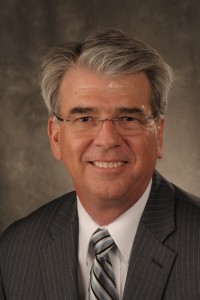
Yeiser, who earned the Regents Professor designation from SFA in 2011-12, will deliver this year’s address at 5:30 p.m. Monday, April 30, in Regents Suites A and B of the Baker Pattillo Student Center on the SFA campus. Refreshments will be served, and there is no admission charge.
He defines an invasive species as any species that is non-native or alien to the ecosystem under consideration and whose introduction causes or is likely to cause economic or environmental harm or harm to human health. The lecture will focus on identifying the invasive species of Texas, how these species spread, why we should care about invasive species and what invasive species activity is occurring in our region.
“An invasive species reproduces, grows and spreads rapidly, establishing and persisting over large areas,” Yeiser said. “Species that become invasive succeed due to favorable environmental conditions and lack of natural predators, competitors and diseases that normally regulate their populations.”
He explained that invasive species negatively impact ecosystems and are expensive to manage.
“In fact, invasive species are a significant threat to almost half of the native U.S. species currently listed as federally endangered,” he said. “It is very expensive to prevent, monitor and control the spread of invasives, not to mention the damage to crops, fisheries, forests and other resources. Invasives cost the U.S. $137 billion annually. Some of the most harmful individual species cost in excess of $100 million annually.”
Yeiser is recognized regionally, nationally and internationally as a leader in product development for woody and herbaceous plant control in southern forests.
He currently teaches intensive silviculture and chemical management of pasture, fence row and forest pests, both at the senior and graduate levels. His research emphasis is herbicidal management of forest vegetation.
Yeiser, a professor of forestry, joined the SFA faculty in 1999, having worked previously at the University of Arkansas at Monticello and the Arkansas Agricultural Experiment Station. He has held the T.L.L. Temple Chair for 13 years and is director of the university’s Forest Resources Institute.
He received the 2006 Faculty Excellence and Achievement in Research award from the SFASU Foundation. In 2007, he was named a fellow of the Society of American Foresters, and in 2008, he was honored with the Research, Development and Innovation Award from the Texas Forestry Association. He currently serves as chairman of the Texas Society of American Foresters and is on the Board of Directors for the Texas Forestry Association.
He helped develop all the major products produced by BASF, Dow AgroSciences, DuPont and Monsanto used today in southern pine management: Roundup, Roundup Pro, Accord SP, Accord Concentrate, Accord XRT, Accord XRT II, Garlon 4E, Garlon 3A, Garlon 4 Ultra, Garlon XRT, Milestone VM, Milestone VM Plus, Tordon 101, Pathway, Pathfinder II, Velpar L, Velpar DF, Oust, Oust XP, Oustar, Escort, Escort XP, Oust Extra, Arsenal AC, Chopper, Chopper GEN2, Pendulum, Fusilade, Poast, Vantage and Vanquish.
He earned a Bachelor of Science in forestry and a Master of Science in agriculture, both from the University of Kentucky, and a Ph.D. in tree improvement from Texas A&M University. During his time at SFA, Yeiser has published 178 articles, given 186 presentations and acquired more than $4 million in grants.
This is the seventh in a series of lectures delivered by SFA Regents Professors. The series is sponsored by the SFA Office of the Provost and the University Lecture Series Committee.
For more information, call (936) 468-2605.