
This is the report from the Nacogdoches County Jail that lists the arrests made from 6 a.m. of the previous day to 6 a.m. of the listed day.

This page may take a moment to load
This is the report from the Nacogdoches County Jail that lists the arrests made from 6 a.m. of the previous day to 6 a.m. of the listed day.
This page may take a moment to load
This is the report from the Nacogdoches County Jail that lists the arrests made from 6 a.m. of the previous day to 6 a.m. of the listed day.

This page may take a moment to load
If you are having trouble loading the mugshots please try using a different internet browser
SFA student lands graphic design scholarship

Stephen F. Austin State University Rusche College of Business student Sarah Bone is a graphic designer with a lifelong love of art and a newfound appreciation for business.
The younger Bone, a lifelong creator of art and a graphic design major, figured out how to put dad’s advice into action. She switched her major to a Bachelor of Arts, a move that gave her the option to add a minor in marketing from the Stephen F. Austin State University Rusche College of Business.
The subtle shift in academic direction is working out fine. Bone just received a $5,000 Skyline Displays of Houston Graphic Arts Education Scholarship for the fall semester through the Advertising Education Foundation of Houston. The nonprofit awards scholarships to those working on undergraduate or post-graduate degrees in advertising, communications, interactive marketing, journalism, radio/TV, commercial art, public relations or related fields.
For Bone, who spends the better part of her days in the Adobe Creative Cloud with Illustrator, InDesign and Photoshop, the scholarship opportunity was low-hanging fruit that had to be picked. She was encouraged to apply at the behest of marketing professor Dr. Marlene Kahla and graphic design professors Peter Andrew and Daniel Anguiano – a clear indication that business and art can work hand in hand.
While Bone still enjoys the fine-arts side of her life, she’s increasingly interested in marketing and advertising, the work she said will give her a salaried foothold in the workforce after graduation. So far, dad’s advice to Bone, backed by her advisors, has proven sage. All that remains is for Bone to make good on all of it.
“I feel blessed to have been chosen for the scholarship, and want to make everyone who got me there proud,” Bone said.
To view Bone’s portfolio, visit https://sarahnbone.wixsite.com/mysite-1/portfolio.
By Richard Massey, marketing communications specialist at Stephen F. Austin State University.
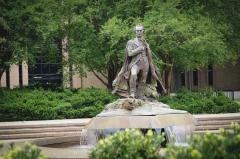
Stephen F. Austin State University has been ranked No. 2 in a list of “hidden gem” universities in Texas by College Gazette for its academic programs, focus on student success and school spirit.
College Gazette ranks schools based on articles and other media, striving to help students find the best fit for their educational needs. SFA attained its high ranking for a number of programs, including its forestry and nursing programs, and its state-of-the-art academic buildings and workspaces like the Early Childhood Research Center and the Cole STEM Building.
SFA’s forestry program is nationally recognized in a large part due to the learning and living environment at the university, said Dr. Hans Williams, dean of the Arthur Temple College of Forestry and Agriculture.
“There is no better place to learn about forest resource management than at SFA, located right in the heart of the forest and water resources of Texas,” Williams said.
The Early Childhood Research Center houses SFA’s open-access charter elementary school, early childhood lab school and Department of Education Studies. This promotes professional contributions and experiences among the highly credentialed faculty members, mentors and coaches for the educator preparation students, as well as the infants and toddlers in the lab school and children in the charter elementary school.
“It is a remarkable blending of academic and pedagogic research and teaching focused on pre-K-16 learning,” said Dr. Judy Abbott, dean of the James I. Perkins College of Education.
To learn more about SFA and its academic programs, visit sfasu.edu.
By Joanna Armstrong, marketing communications specialist for Stephen F. Austin State University.
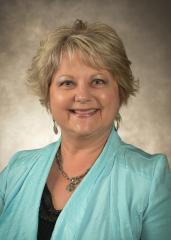
Dr. Nancy Shepherd, assistant professor in Stephen F. Austin State University’s School of Human Sciences, received the 2020 Leader of the Year Award from the American Association of Family and Consumer Sciences Texas Affiliate. The award honors family and consumer sciences professionals who have made significant contributions to the field through their involvement with AAFCS.
The award, which was presented online during the AAFCS-TX board meeting earlier this month due to the COVID-19 pandemic, honors family and consumer sciences professionals who have made significant contributions to the field through their involvement with AAFCS.
Shepherd was nominated for the award because of her achievements as a family and consumer sciences professional during the past 40 years, 13 of which she spent serving in Texas.
“It is a great honor to be nominated by my colleagues and friends who embraced me as one of their own when I moved to Texas,” Shepherd said. “I’ve been active with AAFCS since my undergrad years, which led to opportunities to work with national and international leaders who encouraged me to seek leadership positions.”
Shepherd has worked hard to pass on leadership skills to her students.
“I am inspired to encourage students to seek leadership positions as I believe good leaders help take people to a place they might not go by themselves,” she said.
Shepherd has served as coordinator of SFA’s family and consumer sciences program and as director of SFA’s Center for Economic Education, both part of the School of Human Sciences in the James I. Perkins College of Education.
“We are so proud that Dr. Shepherd has earned this award,” said Dr. Chay Runnels, professor in the School of Human Sciences. “To be honored by one’s peers is a big accomplishment, and we are pleased that Dr. Shepherd has received this recognition.”
President of the National Association of Teacher Educators for Family and Consumer Sciences, Shepherd has served as a state senator and national membership chair for AAFCS.
She has held several AAFCS-TX offices, including president, vice president of academic affairs, vice president of member relations and head of the Centennial Conference Committee.
“I particularly enjoyed my work with the national membership committee and the Texas vision team, which completed and published a study looking at the sustainability of the organization,” Shepherd said.
This award also recognizes Shepherd’s work advising and mentoring family and consumer sciences students and bringing together teachers, administrators and counselors to promote a seamless path for students in FCS careers. For example, Shepherd recently served on a national webinar panel that hosted more than 300 participants to examine how the field of family and consumer sciences is contributing during the COVID-19 crisis.
Nancy Granovsky, former president of the International Federation of Home Economics, congratulated Shepherd on her award.
“You have accomplished so much in your career and have been such a stellar thinker within our profession,” Granovsky said. “This is a well-deserved honor.”
By Jo Gilmore, marketing communications specialist at Stephen F. Austin State University.
The Counseling Clinic at Stephen F. Austin State University is accepting new clients and temporarily waiving all fees during the COVID-19 pandemic.
Though in-person appointments aren’t possible as SFA students shelter in place in their hometowns and residents in Nacogdoches County follow stay-at-home orders, the clinic is helping clients by phone and Zoom from 8 a.m. to 6 p.m. Monday through Thursday. Appointments on Fridays and after 6 p.m. Monday through Thursday also can be made by calling (936) 468-1041.
The Counseling Clinic is part of the Department of Human Services and Educational Leadership in the James I. Perkins College of Education at SFA. It assists SFA students and community members while training graduate students who are in the practicum and internship portion of their education. These graduate students provide counseling services to clients under the supervision of licensed counselor education faculty members.
Counseling Clinic services include individual, parent and child, couples, family, and group therapy, as well as career planning and development.
Clients contact the clinic for help with issues that include anger management, anxiety, career counseling, depression, divorce, employment-seeking skills, grief, life adjustments (for example, homesickness), marriage counseling, parenting, problem-solving, social skills, stress management, substance abuse, test anxiety and time management.
Despite the anxiety and stress caused by the COVID-19 pandemic, fewer people are calling the clinic for help, according to Nashae Turner, director of the Counseling Clinic.
“We’ve seen a decrease in requests for services; however, I believe there is an increase in need,” Turner said. “Those who need it are not aware we are available or are unaware that we’ve found ways to work around barriers.”
These barriers include limited or no internet service, inexperience with video conferencing technology, lack of privacy as family members shelter in place together and share equipment, and Health Insurance Portability and Accountability Act regulations.
“Because we are an instructional clinic, the sessions are all observed either live or on video,” Turner said. “Due to HIPAA regulations, we are unable to record Zoom sessions, so I or other faculty members must sit in on the sessions to monitor graduate students.”
Clients are informed of this policy when they attend sessions in person at the Counseling Clinic, but “they’re not actually aware when it is going on,” Turner said. “With Zoom, they can see when we are monitoring, and that can be uncomfortable for many clients.”
Turner wants to assure community members and SFA students that they can still get the help they need from the clinic.
“I am working closely with Dr. Robbie Steward, the department chair; Dr. Wendy Killam, the Master of Arts counseling program director; and Dr. Leigh Kirby, training director, to stay connected with our community member and student clients while assuring continued compliance with HIPAA and the Council for Accreditation of Counseling and Related Educational Programs training standards during this pandemic,” Turner said.
“We have been able to continue services for most of our clients through Zoom, and we are pleased with the institution’s support in making all required accommodations associated with COVID-19 so that our service delivery might continue.”
Once the pandemic is over, the Counseling Clinic will return to its usual fee system. The first five sessions are free for students and community members. Starting with the sixth visit, costs for community members are determined using a variable fee scale based on gross family income and family size ($5 to $20 maximum per service). SFA students pay $5 per service.
For more information, call the Counseling Clinic at (936) 468-1041.
By Jo Gilmore, marketing communications specialist at Stephen F. Austin State University.
This is the report from the Nacogdoches County Jail that lists the arrests made from 6 a.m. of the previous day to 6 a.m. of the listed day.
This page may take a moment to load
This is the report from the Nacogdoches County Jail that lists the arrests made from 6 a.m. of the previous day to 6 a.m. of the listed day.
This page may take a moment to load
If you are having trouble loading the mugshots please try using a different internet browser
Although the university is not hosting any on-campus events for the foreseeable future due to concerns surrounding COVID-19, students at Stephen F. Austin State University will still be presenting their research — but this time, in a virtual format.
Each year, SFA hosts two student-centered research conferences: the Undergraduate Research Conference and the Graduate Research Conference. During these events, students present their papers and posters.
One research project from each of SFA’s six colleges and one from a regional college is chosen for the Undergraduate Research Conference as Top Scholar and receives $500. Top Scholars present their work in an oral presentation or performance. This year’s URC winners are Karina Weathers, Nelson Rusche College of Business; Lauren Pate, James I. Perkins College of Education; Charlie Davis, College of Liberal and Applied Arts; Samantha Altamirano, College of Fine Arts; Xander Haynes, College of Sciences and Mathematics; Kasey Jobe, Krista Ward and Nick Schiwitz, Arthur Temple College of Forestry and Agriculture; and Morgan Gray, representing Tyler Junior College.
In addition, seven additional outstanding student research projects are selected by each college and designated as finalists. Finalists present a research poster during the conference.
Dr. Michael Tkacik, director of SFA’s School of Honors and professor in the Department of Government, who also serves on the URC’s executive committee, commended this year’s winners on their innovation and creativity.
“I’m impressed with not just the hard work and intellectual mastery the students’ research shows, but I’m also impressed with the creativity the students demonstrated,” Tkacik said. “It is exciting to see students tackle problems in new and dynamic ways. There is something invigorating about discovering new knowledge.”
To view posters submitted for the Undergraduate Research Conference, visit sfasu.edu/urc.
Thirty-five individuals are presenting their research during the Graduate Research Conference, which may be viewed online at grc.sfasu.edu.
All graduate students are encouraged to submit their research for conference inclusion. A committee of university faculty members reviews the submissions and decides on those that will move forward to present.
Dr. Sarah Savoy, associate professor of psychology and co-facilitator of the GRC, said she was impressed with how quickly the students were able to transition their work to an online platform.
“This conference has always been about celebrating graduate student research and creative activity and giving students an opportunity to practice presenting in a professional setting,” Savoy said. “This year, students are getting a little added practice by using technology.”
Robin Johnson, a GRC presenter representing the College of Liberal and Applied Arts, was able to transition her crisis communication plan presentation to an online format. While adjusting to a Zoom presentation involved some tweaks, she is excited to share her work with a larger audience.
“One positive about the conference being offered online is that people who would not have been able to travel and see our work now have the opportunity to view it,” Johnson said.
At the end of the semester, judges for the Graduate Research Conference will select two award winners — best poster and best paper — with each student receiving $300.
By Emily Brown, marketing communications specialist at Stephen F. Austin State University.
SFA professor shares his insight regarding economics, effects of COVID-19
 In higher education, much emphasis is placed on transformative learning experiences. In fact, when administrators at Stephen F. Austin State University were drafting the university’s 2015-23 strategic plan, they assigned providing students with transformative learning experiences as the institution’s overarching goal.
Generally, these types of experiences are gained through internships, work study and study abroad activities in which students voluntarily participate. They provide the types of hands-on learning opportunities that help students acclimate to the world and their careers after graduation.
Recently, just about every college student worldwide has become actively engaged in a transformative learning experience as a result of the effects of COVID-19. Though there are many lessons to be learned from this pandemic, the lessons involving economics will be especially far reaching.
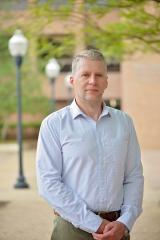
“Every person on the planet is making adjustments,” said Dr. Mikhail Kouliavtsev, department chair and professor of economics at SFA. “The uncertainty created by the virus is having a cross-cut influence on all sectors of the economy, affecting households, businesses and financial markets.”
With an estimated 67 million Americans working in jobs that are labeled as “high risk” for layoffs, Kouliavtsev offered some insight into several aspects of the world crisis, especially as it relates to economics.
Layoffs
Kouliavtsev recommends doing four things if you’ve been laid off.
Immediately file for unemployment. Most state unemployment offices are overwhelmed and understaffed, so delays are likely. The sooner you act, the faster you can get in the queue.
Talk to your landlord, mortgage lender, utility provider and/or credit card issuer. Many are offering some sort of bill “holiday” to help customers. If not, ask if they will be flexible. You won’t be the only one asking.
Focus on keeping everyone in your household healthy. Other expenses can be postponed.
Resist the urge to liquidate your retirement account. The penalty for early withdrawal added to the tax liability will eat a substantial chunk of your funds, which will be difficult to rebuild.
Stock market
Kouliavtsev believes the stock market will continue to bounce around as long as there is uncertainty about the pandemic or until we have hit the peak of new infections and deaths from COVID-19, and the health care system can manage the flow of the sick. When we know there are treatments and a vaccine in development, we will have a better idea of the timeline of this crisis, and then the market can begin to stabilize.
Retirement accounts
According to Kouliavtsev, those very near retirement likely already had most of their retirement funds out of the stock market and in something less volatile, like fixed-income bonds, before the crisis hit. For those who did not, postponement of retirement may be necessary to allow fund recovery. Kouliavtsev warns that panicking and selling investments now may have dire consequences, as those who have already lost due to the market plunge will miss the opportunity for fund recovery.
Stimulus package
“It will help, but it also will not be nearly enough,” Kouliavtsev said. “Hopefully, it is a down payment on a much larger investment the government will have to make to help the American people.” For individuals approved to receive the $1,200, Kouliavtsev believes it won’t go very far; especially when the median rent for a one-bedroom apartment in the U.S. is about $1,100, and many people have already been without income for more than a month. Another difficulty Kouliavtsev sees is making the stimulus package work in its intended fashion — to stimulate the economy — when stores, restaurants and service industries are closed, and people are instructed to stay home.
Paying for government spending
Significantly increasing government spending — as this stimulus package requires — without immediately raising taxes will mean running a large budget deficit. While this debt accumulation typically is a major concern for long-term growth, interest rates are at some of the lowest levels in history, practically zero. When taking inflation into account, rates are effectively negative, meaning the government can essentially borrow at no cost. In other words, if there was ever a time for the federal government to spend freely and not worry about the debt it accumulates it’s now. Because of the severity of the pandemic, it is important to focus on the “public” before we worry about “public debt.”
Investing
Kouliavtsev said typically, a significant plunge in the stock market is a good time to invest, if the investment is made with the long term in mind. As far as real estate, mortgage rates are low, and we are headed into summer, which generally signify a favorable time to buy. However, it is not easy to shop for a home due to the actual steps involved in buying — attending open houses, meeting with bankers and real estate professionals, etc., due to social distancing guidelines.
Job growth
Since many people have been in quarantine and isolated with only their computers and the internet to keep them company, Kouliavtsev believes the U.S. will see an increase in tech-related occupations, like coding and data science. He also said it will be interesting to see how health care will be affected. “It was already a sector that needed reforming before the COVID-19 pandemic,” Kouliavtsev said. “But it was primarily the cost of health care and insurance coverage that were the main issues. We are now seeing that having adequate hospital and ICU bed capacity may be just as important, as is staffing, including doctors, nurses and other health care workers. We may see a concerted effort to invest in health care more broadly, and that will expand the job opportunities in these careers.”
Impact on higher education
With most institutions switching to an online instruction format, students are not physically on campus, and therefore there is less revenue being generated from housing, meal plans and fees students pay for things like the use of on-campus computer labs, recreation facilities, library resources, etc. SFA will be refunding approximately $9 million to students for services like these for the 2020 spring semester. This type of revenue loss will hit higher education hard, especially private colleges. Kouliavtsev said there are some bright spots. We typically see higher enrollments in colleges and universities during recessions because scarce employment opportunities during economic downturns make people want to attain skills, certifications and degrees to help improve their employability. And, to the extent students and their families may want to stay close to home in these uncertain times, regional institutions, like SFA, may be in a good position to fulfill their missions — serving the region. SFA, for example, may be an excellent destination for students from the East Texas area who planned to attend college in Austin or College Station, but now want to stay closer to home.
Student adjustment
“I am quite impressed with how our students accepted foregoing their spring break, not being able to participate in study abroad trips in May and summer, and for some, not being able to attend their own commencement ceremony with their families,” Kouliavtsev said. “The transition to online classes is not easy — for students or professors — but it seems everyone understands the circumstances and is trying to make it work.”
Positive outlook
Eventually, things will return to normal — although our day-to-day lives may be forever altered. And as difficult as the past several weeks have been, Kouliavtsev said there are some positives to take away. First, we will have learned a great deal about how to manage a crisis. They don’t come around very often, but pandemics do happen, and we will be better equipped to handle the next public health crisis, know how much and what kinds of stimulus packages are needed, and have a better idea of the timeline involved. Second, some of the personal hygiene habits we have been encouraged to practice — regular and thorough handwashing, covering a cough, being mindful of face touching — may help us reduce the spread of other illnesses, including influenza. This could translate into substantial savings to employers from fewer people missing work, less strain on the health care system and fewer lives lost. Third, people quarantined to their homes are spending more time with their families, cooking and eating together, possibly learning new skills and taking online classes. “There is definite value in all of these activities,” Kouliavtsev said.
By Donna Parish, assistant director of creative and editorial services at Stephen F. Austin State University.