
SFA clinical instructor explores improving orientation and mobility training in developing nations

Jennifer Perry, second from right, an orientation and mobility clinical instructor and doctoral candidate in the James I. Perkins College of Education at Stephen F. Austin State University, and members of Nepal’s Bright Star Society are pictured in Panauti Village moments after a community outreach event near Kathmandu. Perry, the guest of honor, was presented a scarf, a flower laurel, a handmade wooden cane and a statue of Ganesh, a god who is credited with being able to remove obstacles. Perry continues to work with Bright Star Society to explore orientation and mobility training and other rehabilitation services for individuals who are blind in Nepal and other developing nations. Photo courtesy of Jennifer Perry

Jennifer Perry, second from right, an orientation and mobility clinical instructor and doctoral candidate in the James I. Perkins College of Education at Stephen F. Austin State University, and members of Nepal’s Bright Star Society are pictured in Panauti Village moments after a community outreach event near Kathmandu. Perry, the guest of honor, was presented a scarf, a flower laurel, a handmade wooden cane and a statue of Ganesh, a god who is credited with being able to remove obstacles. Perry continues to work with Bright Star Society to explore orientation and mobility training and other rehabilitation services for individuals who are blind in Nepal and other developing nations. Photo courtesy of Jennifer Perry

Bashudev Adhikari, the first son of a family in Nepal, was born blind because of a genetic condition called retinitis pigmentosa. Then the second-born son, Sushil, lost his sight at age 11 from glaucoma. Believing in a religious connection — as if his sins caused his sons’ inability to see — their father left his family to prevent any further harm to his children.

These two brothers, unlike many children who are blind in the area, had the resources to go to school. But when they arrived, their teachers, who weren’t trained to work with students who are blind, told them, “Just go home and get taken care of by your family. That’s your future.”

These words inspired Bashudev and Sushil to establish Bright Star Society in Nepal in 2013 to help bridge the gap between people with and without disabilities. The society’s motto is, “Doing the best we can with what we have with where we are.”

For those with disabilities, the society provides leadership development, assistive technology, career enhancement and other assistance like cane distribution and the transcription of restaurant menus into Braille. For those without disabilities, Bright Star Society offers information on inclusion, accessibility, universal design and volunteer opportunities.

While planning her November vacation to Nepal, Jennifer Perry, an orientation and mobility clinical instructor and doctoral candidate in the James I. Perkins College of Education at Stephen F. Austin State University, discovered Bright Star Society on Facebook and reached out to the brothers.

Soon she had an invitation to accompany Bright Star Society members to a local school that welcomes students who are blind. There, she shared information about accessibility in America. Bright Star Society also invited Perry to present at a community outreach event featuring members of the Federal Parliament of Nepal and marking the International Day of Persons with Disabilities.

Perry knew Nepal didn’t have a version of the Americans with Disabilities Act to protect people with disabilities. Truncated domes, curb cuts and other tools that help people with visual impairments navigate a city in the U.S. are not required.

“When we teach orientation and mobility in America, we are teaching the skills of the cane that relate to the laws of the land,” Perry said. “But those laws don’t apply in Nepal.”

As soon as she arrived in Kathmandu, Nepal’s capital with more than 1 million residents, Perry was struck by even greater challenges that people with visual impairments face in this region. These include the lack of health insurance and medical treatments that could help prevent, slow down or even cure the three biggest causes of blindness in Nepal: cataracts, glaucoma and retinitis pigmentosa.

Then there are the basic environmental factors. “Traffic control doesn’t exist. You can drive on either side of the road at any time of the day, either direction, and pedestrians are just expected to play Frogger when they’re crossing the street. That’s normal,” Perry said.

Plus, Nepal doesn’t have traffic lights with green, yellow and red signals — just an occasional blinking light warning drivers about an upcoming intersection. “In our way of crossing the street, we listen for the traffic to stop, and then we know we can cross,” Perry said. “Over there, the traffic is always going, especially in Kathmandu.”

The narrow sidewalks are even more perilous than the roads.

“Many of the sidewalks haven’t been repaired since an earthquake hit the region in April 2015,” Perry said. The magnitude 7.8 earthquake killed nearly 9,000 people and injured more than 22,000. An estimated 100,000 people are still living in emergency makeshift accommodations.

The sidewalks also are filled with people cooking and burning trash on open flames because the electricity isn’t reliable in the region. The many stray dogs roaming the streets, and the vendors selling their goods curbside also make it difficult for pedestrians traveling through Kathmandu.

“Even when a police officer was directing traffic, motorcycles drove up on sidewalks,” Perry added. “I asked some of the Bright Star Society associates if they ever traveled on their own, and they all said no.”

When Perry visited Sanjiwani Model Secondary School, which educates students who are blind alongside those who have sight, she met with 24 students between the ages of 6 and 16 who have visual impairments. They described teachers standing at the front of classrooms presenting lessons in a traditional manner and drawing on chalkboards.

“There’s no intervention or assistance to help students who are blind better understand the lessons,” Perry said. “There’s no model, Braille or audiobooks. Most supplies, like canes, get lost in the mail because of all the different borders they have to cross to get to Nepal. So whatever the students can grasp just through listening is what they know, but there’s no standardized test to assess that knowledge the way we have in the U.S.”

After they’ve finished school, most students said they’ll return to their families.

“So then you wonder what’s the point of their education,” Perry said. “However, it’s not like they’re really getting educated because there’s no specialized teacher for the blind, there are no tactile graphics, and there’s no orientation and mobility training.”

Without health insurance or institutions to help adults with visual impairments, families prefer to take care of their relatives with disabilities at home, which often creates more hardships for them.

“When I asked the students what help they wanted, they didn’t have an answer for me because they don’t know what the possibilities are,” Perry said.

According to Sushil, no one like Perry had visited the school before. Peace organizers had stopped by in the past, but they were working to create harmony between nations, increase inclusion on a more general scale and fight for basic human rights.

“My goal was more targeted,” Perry said. “I told students, ‘I want this for you, and I know that this is possible for you. I know that this training exists,’” Perry said.

She told them about specially trained teachers, resources for those with visual impairments, college programs and mandated accessibility at universities in the U.S. “But I felt like I was depressing the students because they don’t have anything like that there.”

Then Perry explained to the students that the U.S. didn’t always have resources and laws to protect people with disabilities.

“We had to start somewhere,” she told the students. “We had to put pressure on the government and local community organizers. And that’s exactly what Bright Star Society is doing here.”

Perry continued, “I also told the students that they are a critical part of that. They can’t just be complacent and assume that this is all they’ll ever have. There’s more, and they have to keep asking for more.”

Perry also presented to residents of Panauti Village, a rural settlement southeast of Kathmandu. Members of the Federal Parliament of Nepal also attended to hear Perry, who was the guest of honor. Between earthquake recovery and the political pressures from China to the north and India to the south, parliament members have plenty to deal with, but they took the time to learn about disability activism at this community outreach event, which also built support for the International Day of Persons with Disabilities on Dec. 3.

Against the backdrop of the Himalayas, Perry talked about hope, the future and inclusion while Sushil translated her words into Nepali. “I discussed the possibilities of our working together — America and Nepal — to improve the lives of people with visual impairments,” she said.

After the presentation, “They all came up to me and wanted to kiss my hand and have me hold their children,” Perry said.

The trip also included a lunch with a local family during which Bright Star Society members worked to dispel stereotypes about disabilities in general and blindness specifically.

To help support Bright Star Society’s efforts, Perry will continue to work with the brothers through online teaching technology like Zoom and occasional visits to the region. She’s also trying to financially help the society.

“It’s not funded through the government, and it’s not registered as a private nonprofit — those don’t exist,” Perry said.

Each of the 10 people on the society’s board of directors contributes $20 a month toward the budget. “So their essential spending budget is $200, plus any other donations that come in,” Perry said. “I know it doesn’t sound like a lot, but $200 goes a lot further over there.”

Since her visit, Perry has committed to sending at least $20 every month to the society. She also has been named a disability consultant for the society, and she is working with an accountant to see how she can establish an American affiliate of Bright Star Society.

The students in Perry’s Leadership in Mobility class at SFA are helping her brainstorm a training program with global applicability.

“What would orientation and mobility look like in a developing nation? It probably wouldn’t be a college degree program,” Perry said. “It would probably be more like a six-week training seminar. Or something like Doctors Without Borders but for rehabilitative professionals.”

Assistance would include counseling for both people who are blind and their families to help with the emotional side of this disability. It also would include instruction on how to use residual sight better.

Though the challenges that Bright Star Society faces seem insurmountable, one of Perry’s students mentioned the ripple effect, which Perry said is driving her involvement with the society today.

“We do have huge problems globally, but helping one person helps another, helps another, helps another.”

To learn how you can help, contact Perry at perryjn1@sfasu.edu.

By Jo Gilmore, marketing communications specialist at Stephen F. Austin State University.

Posted in All SFA, SFA News | Leave a comment

‘Satan and Adam’ featured in SFA’s Friday Night Film Series

 SFA will screen the documentary "Satan and Adam" at 7 p.m. Friday, Feb. 7, in The Cole Art Center @ The Old Opera House in downtown Nacogdoches. Admission is free.

SFA will screen the documentary “Satan and Adam” at 7 p.m. Friday, Feb. 7, in The Cole Art Center @ The Old Opera House in downtown Nacogdoches. Admission is free.

The Stephen F. Austin State University School of Art and the Friends of the Visual Arts will present a free, one-night screening of the documentary “Satan and Adam” at 7 p.m. Friday, Feb. 7, in The Cole Art Center @ The Old Opera House in downtown Nacogdoches.

“Satan and Adam” chronicles the unlikely pairing of legendary one-man band Sterling “Mr. Satan” Magee and harmonica master Adam Gussow. Shot over 20 years, the film showcases one of the greatest blues duos. According to information at http://satanandadamfilm.com, Magee experienced the music industry’s exploitation of black musicians firsthand. So he walked away to play on the Harlem streets for “his people.” Reborn as Mr. Satan, he spread his gospel and became a New York City legend. When Gussow, a white Jewish musician, asked to play with him, their lives took a powerful turn. Gussow cast aside an ivory tower life, and Magee’s embrace of his apprentice forged a sound that thrust him back in the spotlight due to a chance encounter with rock icons U2. But life on the road took its toll, and Magee vanished. The separation would test both men’s courage, and their journey to find each other again is a tale of tragedy, survival and miraculous rebirth.

The film features U2’s The Edge, the Rev. Al Sharpton, Harry Shearer and Peter Noel. It is directed by V. Scott Balcerek and produced by Ryan Suffern and Frank Marshall of Kennedy/Marshall and RYOT Films.

This screening is part of the School of Art’s monthly Friday Film Series and is sponsored in part by William Arscott, Nacogdoches Film Festival, Karon Gillespie, Mike Mollot, David Kulhavy, John and Kristen Heath, Galleria Z, Jill Carrington, Jean Stephens, Jim and Mary Neal, Richard Orton and the Nacogdoches Junior Forum.

The Cole Art Center is located at 329 E. Main St. For more information, call (936) 468-1131.

Posted in All SFA, SFA News | Leave a comment

January 28, 2020: NPD Crime Report

This is a complete list of reports responded to by the Nacogdoches Police Department

This page may take a moment to load.

Click Here to load a separate PDF file

Posted in All Police, NPD Crime Log | Leave a comment

January 28, 2020: Nacogdoches Sheriff’s Crime Log

This is the report from the Nacogdoches County Jail that lists the arrests made from 6 a.m. of the previous day to 6 a.m. of the listed day.

This page may take a moment to load

Click Here to load a separate PDF file

Posted in All Police, SO Crime Log | Leave a comment

January 28, 2020: Nacogdoches County Booking Report

This is the report from the Nacogdoches County Jail that lists the arrests made from 6 a.m. of the previous day to 6 a.m. of the listed day.

This page may take a moment to load

If you are having trouble loading the mugshots please try using a different internet browser

Click Here to load a separate PDF file

Posted in All Police, Booking | Leave a comment

Guest artist Weinberg to perform percussion, electronics concert at SFA

Norman Weinberg

Norman Weinberg

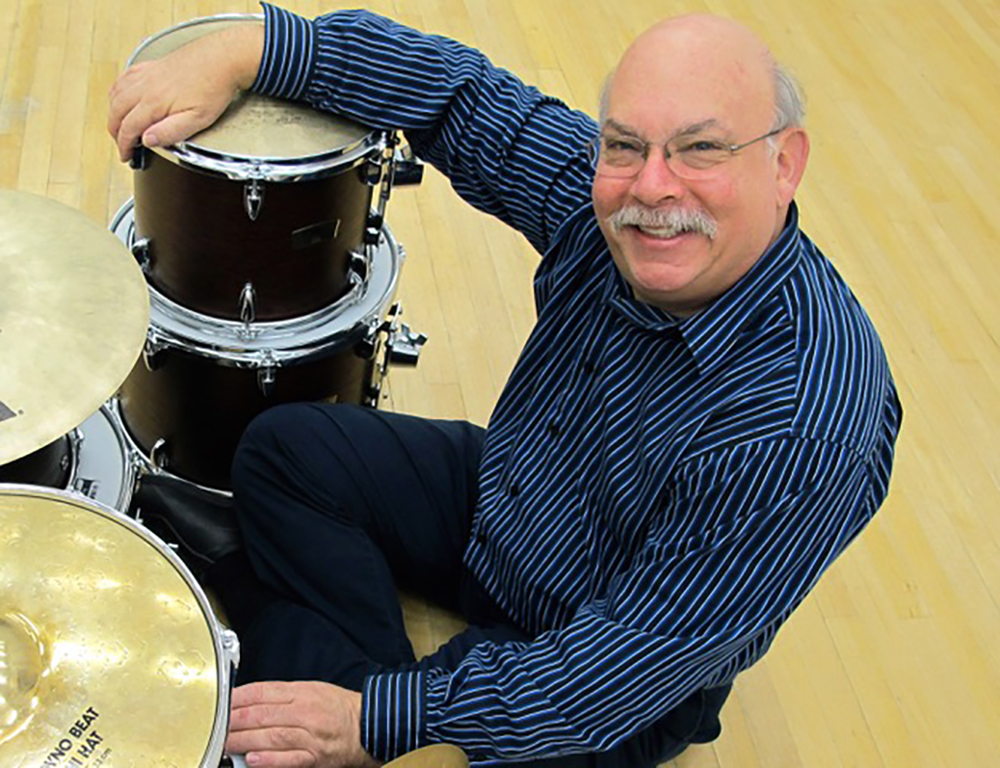
Guest artist Norman Weinberg will present a recital of contemporary music written for percussion and electronics at 6 p.m. Wednesday, Feb. 5, in Cole Concert Hall on the Stephen F. Austin State University campus.

The performance will include works for percussion with fixed media, percussion with live electronics, and works written exclusively for electronic percussion.

Weinberg will be joined by members of the SFA Percussion Studio in a performance of “Dreams” by David Molk. The work features three live performers with a fixed media track.

“With one player on vibraphone and two ‘stand-up drumset’ performers, the music combines traditional with contemporary musical elements that result in a piece that’s fun and animated for the performers and audience alike,” Weinberg said.

Two of Weinberg’s original works will be featured in the recital. Both were written purely for electronic percussion using instruments called DrumKATs. “Beijing” was composed after hearing a street musician begging under a bridge during a trip to China, while “Hadrian’s Wall” is an experimental composition exploring musical density and rhythmic ambiguity, according to the artist.

Another work on the program, “Apocalyptic Passacaglia on a Theme by John Cage,” was created by composer and conductor Martin Georgiev. This work combines a solo snare drum performance – using various striking positions and special effects – along with a video created by Georgiev that plays the role of a duo partner with rhythmic flashes of “conflict and upheaval in our modern world,” according to the composer.

Other works to be performed are by Brett William Dietz and Andrea Mazzariello.

Currently a professor emeritus at the University of Arizona, Weinberg served as the director of percussion studies for 20 years. He also served as the director of percussions studies at Del Mar College in Corpus Christi from 1979 to 1997. Weinberg has been involved in electronic percussion since 1985 and has nearly 300 published articles on percussion performance and education.

Recital tickets are $8 for adults, $6 for seniors and $3 for students and youth. For tickets or more information, call the SFA Fine Arts Box Office at (936) 468-6407 or visit www.finearts.sfasu.edu.

Posted in All SFA, SFA News | Leave a comment

January 27, 2020: NPD Crime Report

This is a complete list of reports responded to by the Nacogdoches Police Department

This page may take a moment to load.

Click Here to load a separate PDF file

Posted in All Police, NPD Crime Log | Leave a comment

January 27, 2020: Nacogdoches Sheriff’s Crime Log

This is the report from the Nacogdoches County Jail that lists the arrests made from 6 a.m. of the previous day to 6 a.m. of the listed day.

This page may take a moment to load

Click Here to load a separate PDF file

Posted in All Police, SO Crime Log | Leave a comment

January 27, 2020: Nacogdoches County Booking Report

This is the report from the Nacogdoches County Jail that lists the arrests made from 6 a.m. of the previous day to 6 a.m. of the listed day.

This page may take a moment to load

If you are having trouble loading the mugshots please try using a different internet browser

Click Here to load a separate PDF file

Posted in All Police, Booking | Leave a comment

SFA teacher candidates in online completer programs link math to real-world careers for fourth and fifth graders

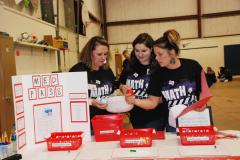
 Wensdy Maldanado, Alex Smith and Amy Almanza, Stephen F. Austin State University elementary education seniors from Jacksonville, Hudson and Palestine, respectively, help Smith prepare her Mathematics Career Carnival lesson for fifth graders Dec. 2 at the Nettie Marshall Academy of Dual Language, an elementary school in Nacogdoches. At the carnival, fourth and fifth graders learned how to connect what they’re learning in math class to real-world careers. Smith’s Med Pass lesson taught fifth graders how to calculate the correct doses of medication by dividing whole numbers by unit fractions and vice versa. Maldanado, Smith and Almanza are participating in the James I. Perkins College of Education online completer program for teacher candidates, so they can complete their degrees while working and raising families.

Wensdy Maldanado, Alex Smith and Amy Almanza, Stephen F. Austin State University elementary education seniors from Jacksonville, Hudson and Palestine, respectively, help Smith prepare her Mathematics Career Carnival lesson for fifth graders Dec. 2 at the Nettie Marshall Academy of Dual Language, an elementary school in Nacogdoches. At the carnival, fourth and fifth graders learned how to connect what they’re learning in math class to real-world careers. Smith’s Med Pass lesson taught fifth graders how to calculate the correct doses of medication by dividing whole numbers by unit fractions and vice versa. Maldanado, Smith and Almanza are participating in the James I. Perkins College of Education online completer program for teacher candidates, so they can complete their degrees while working and raising families.

In the gym at the Nettie Marshall Academy of Dual Language, an elementary school in Nacogdoches, fourth and fifth graders are solving math problems tied to real-world careers instead of playing basketball.

At Mathematics Career Carnival, the lessons are designed and taught by Stephen F. Austin State University teacher candidates. This past fall, fourth and fifth graders at the SFA Charter School and Nettie Marshall participated in the carnival. Emeline Carpenter Elementary School will host the event April 24.

Dr. Mark Montgomery, SFA assistant professor of elementary education and a faculty advisor for the Mathematics Career Carnival for the past four years, said this event “helps teacher candidates understand how easy it can be to engage young learners in problem-solving mathematics tasks and to connect classroom learning with real-world careers.”

He added, “It also shows them that sometimes you have to teach on the fly and adjust for a student who needs support to be successful or who is ready to extend his or her learning.”

The event on Dec. 2 at the dual-language academy offered an added benefit: “We got to work with students who are learning English as a second language,” said Amy Almanza, an elementary education senior from Palestine.

Most of the 30 teacher candidates at the Nettie Marshall Mathematics Career Carnival were participating in SFA’s online completer program in the James I. Perkins College of Education. They have earned credits at other colleges, sometimes for other degrees, that they’re applying toward an education degree at SFA.

Some of these teacher candidates are taking classes while working and raising families in cities outside Nacogdoches. Some are building the path toward second careers. They’re all completing their degrees mostly through online courses and discussion boards using technology SFA has invested in such as D2L.

Almanza chose SFA to complete her degree because, “It was the most accommodating school. The professors here understand we have busy lives outside school.”

Dr. Paula Griffin, an SFA associate professor of elementary education and a faculty advisor for the Mathematics Career Carnival, has taught in the online completer program since 2006. “SFA has partnerships with many community colleges to help ensure these completers can seamlessly transition into their coursework here,” she said.

Almanza has a full-time job as a preschool teacher for Palestine Independent School District, but she wants to teach and coach older students in high school. She also has two kids of her own.

“The online courses work perfectly for me,” she said. “I’m able to complete my whole degree and keep my job. And because I’m already teaching in my school district, I’ve got my foot in the door for other jobs at PISD.”

Wensdy Maldanado, an elementary education senior from Jacksonville, has worked the past 10 years as a personal loan officer. Though she found that job rewarding, she “wanted to help people learn and grow. Plus, I want to work from 7 a.m. to 3 p.m. instead of 7 a.m. to 7 p.m.,” she said.

Alex Smith, an elementary education senior from Hudson, earned a nursing degree in 2014 and passed her state nursing exams in 2015. Though she enjoyed working with her patients, who were mostly elderly residents at nursing homes, she grew frustrated at the lack of resources these facilities face.

Smith took a job as a school nurse and started substitute teaching for the Hudson Independent School District. “I truly always wanted to be a teacher, but face-to-face classes weren’t practical at this point,” she said.

SFA’s online completer program offered Smith a way to use the core credits she’d already earned for her nursing degree toward an elementary education degree.

Almanza, Maldanado and Smith met in their first online education class, and the trio formed a study group. “You have to have a support group when you’re earning a degree online,” Almanza said.

For online teacher candidates, experiences like Mathematics Career Carnival offer not only valuable training with elementary school kids but also a chance to interact in person with classmates and professors.

“This wasn’t a mandatory event, but we wanted to do it,” Maldanado said. “We saw it as an opportunity.”

Smith’s experience as a nurse came in handy during the carnival. She used a real-world situation — diagnosing patients and prescribing the appropriate medications for them — to teach Nettie Marshall fifth graders about whole numbers and fractions with her lesson, Med Pass.

“To give the right dose of medicine to the right patient, the fifth graders have to be able to divide whole numbers by unit fractions and vice versa,” Smith said.

In the end, Mathematics Career Carnival helped both teacher candidates and elementary school students focus on their future careers.

For more information about online completer programs in the Perkins College of Education, email ec6online@sfasu.edu.

By Jo Gilmore, marketing communications specialist at Stephen F. Austin State University.

Posted in All SFA, SFA News | Leave a comment