
This is a complete list of reports responded to by the Nacogdoches Police Department
This page may take a moment to load
This is a complete list of reports responded to by the Nacogdoches Police Department
This page may take a moment to load

This is the report from the Nacogdoches County Jail that lists the arrests made from 6 a.m. of the previous day to 6 a.m. of the listed day.

Inmates can send letters to be posted on Everything Nac:
Everything Nac
PO Box 630091
Nacogdoches, Texas, 75963-0091
This page may take a moment to load
This is the report from the Nacogdoches County Sheriff’s Office that list the reports from 6 a.m. of the previous day to 6 a.m. of the listed day.
This page may take a moment to load
The Old Fashion Sweet Tooth Sugarcane event will be held Saturday, January 12, 2013 from 8:00 to Noon at the Durst-Taylor Historic House and Gardens. We will press our sugarcane with an late 1800’s sugarcane mill powered by a mule. The cane will be pressed and then boiled into ribbon cane syrup. The Nacogdoches Kiwanis Club will sell pancake plates with all the fixings’ including cane syrup. The Nacogdoches Junior Forum will be collecting new women’s and children’s pajamas as part of their annual pancakes and pajamas program; all pajamas will be given to the Nacogdoches Women’s Shelter. We will have many other demonstrations and hands-on activities including blacksmithing, a spinning demonstration, crafts, tours of the Durst-Taylor Historic House and live string music. Bring your friends, family or anyone with a love of history or a sweet tooth! The mule will start pressing the sugarcane at 9:00 am, so arrive early if you would like to see the cane being pressed.
The Durst Taylor Historic House and Gardens is located at 304 North St. Nacogdoches, TX. If you would like any more information please contact the Historic Sites Department at 560-4441 or email us at historicsites@ci.nacogdoches.tx.us.
Starts: 8:00am on January, 12
End Time: 12:00pm
Location: Durst Taylor Historic House and Gardens
Cost: Free
Phone Number: 936-560-4441
Email: historicsites@ci.nacogdoches.tx.us
 The City of Nacogdoches Main Street program is excited to announce that tickets for the inaugural Wine Swirl are on sale at Hotel Fredonia, 200. N Fredonia Street. “We are so excited about ticket sales so far. The support and feedback from the community has been great,” said Main Street Director Sarah O’Brien.
Swirl proceeds will be used to enhance the beautification and promotion efforts of historic downtown Nacogdoches. The ticketed wine and food pairing event will showcase Texas wineries and local restaurants, inside the doors of our wonderful & unique downtown merchants. Attendees will have the opportunity to enjoy wine samples from at least 10 Texas wineries and taste delicious fare from many Nacogdoches restaurants. The event will also give attendees the opportunity to interact with local artisans, enjoy live music, be entertained by various street performers, and sample the wonderful hospitality from our local merchants.

Wine Swirl Committee Members from right to left: Gini Prince, Charlotte Aschcraft, Councilmember Shelley Brophy, Tara Naramore, Samantha Mora and Keri Lanius purchase their Wine Swirl tickets at Hotel Fredonia. There are only 350 tickets to the inaugural event and they are selling fast.
said O’Brien.
2013 Swirl Sponsors include: Private Label: Brookshire Brothers, Champagne: Alta Construction, Domus Development, Hotel Fredonia, Merlot: CBH Insurance, Chardonnay: Peppard Autoplex, Jo Carlson, The Fashion Shop, Memorial Hospital, Bruce Mayberry II – Financial Advisor – Wells Fargo Advisors, Giglio Distributing and
Naca Valley Vineyard.
For details on the Nacogdoches Main Street Wine Swirl such as sponsorship opportunities please call the City of Nacogdoches Main Street Office at 936-559-2573 or email obriens@ci.nacogdoches.tx.us. For ticket sales please call Hotel Fredonia at 936-564-1234. Be sure to “Like” @Nacogdoches Main Street Downtown Wine Swirl on facebook for all the latest details on the event.
 The Stephen F. Austin State University College of Fine Arts and School of Art will open “Contemporary Western Art” with a 5:30 p.m. reception Thursday, Jan. 17, in Griffith Gallery on the SFA campus.
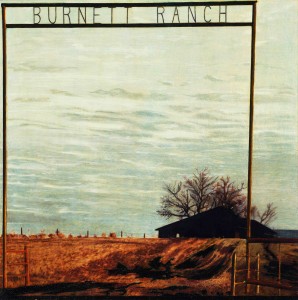
“Burnett Ranch” by Natalie Erwin is among the work to be featured in “Contemporary Western Art,” an exhibition opening Thursday, Jan. 17, in the Griffith Gallery on the SFA campus.
“The show will represent seminal contemporary western artists working from the 1950s to today,” John Handley, director of SFA galleries, said. “The exhibition will highlight how modernist painting has influenced contemporary artists.”
Among the featured artists are Chapman Kelley, William Wells Bomar, Jon Flaming and Daryl Howard.
“Contemporary Western Art,” which will run through March 8, is sponsored in part by the Nacogdoches Junior Forum and SFA Friends of the Visual Arts. The exhibition, which is part of the School of Art’s Gallery Series, will complement another exhibition, “Big Skies, Brave People: Southwest American Art from the Panhandle-Plains Historical Museum,” which opens Jan. 26 in The Cole Art Center in downtown Nacogdoches.
Griffith Gallery is located in the Griffith Fine Arts Building, 2222 Alumni Dr. The Gallery’s regular hours are 12:30 to 5 p.m. Tuesday through Friday, and admission is free. The gallery is temporarily closed for the holiday break and will reopen with the exhibition reception on Jan. 17. For more information, please call (936) 468-1131.
Two Stephen F. Austin State University School of Music faculty performances are scheduled to occur the week that students return to campus for the spring semester.
Brad Meyer, director of percussion studies at SFA, will perform at 7:30 p.m. Monday, Jan. 14, in Cole Concert Hall. The event will feature two premier performances, including “Seven to Queens,” a timpani solo by Andrew Beall, and “trust me,” which is a piece for two players on one marimba and saxophone. “trust me” will also feature Scott Harris, interim director of the SFA School of Music, and Nathan Nabb, associate professor of saxophone.
Meyer’s recital will also include solos on vibraphone and marimba as well as a percussion trio entitled “The Frame Problem” featuring percussionists Laura Wright, Granbury senior, and Melanie Settle, Grand Prairie senior.
The SFA Faculty Brass Quintet will perform at 7:30 p.m. Thursday, Jan. 17, in Cole Concert Hall. The quintet has always been comprised of SFA’s faculty brass artists, including Gary Wurtz, trumpet, Charles Gavin, horn, Deb Scott, trombone, and J.D. Salas, tuba, along with a graduate student performing the second trumpet part.
“This year, however, the trumpet studio has two talented trumpet graduate students — Justin Wood of League City and Paul Roberts of Baytown — and both of them will take part in the ensemble,” according to Salas, assistant professor of tuba and euphonium studies.
Among the pieces to be performed are Sextet in E-flat minor by Oskar Böhme and Brass Quintet Op. 65 by Jan Koetsier. According to program notes by Dr. Richard E. Rodda, Böhme’s Sextet is an “an imposing work in its scale, sonority and formal, textural and harmonic sophistication … a virtual symphony for brass,” while Salas described the Koetsier piece as “one of the staples of the brass quintet repertoire.”
“It features each member of the ensemble in many different styles and meters,” he said.
Tickets for each of these recitals are $5 for adults, $4 for seniors and $2 for students. For tickets or more information, call the Fine Arts Box Office at (936) 468-6407.

Chris Herrington, Contributing Writer
I hear this. The work is the same, regardless of the number or type. Anything that you can release by letting go of it, do so. Then, anything that is sticky and adhesive, give yourself an increasing level of diminishment schedule so that over time you evaporate it from your life. If you smoke, for example, erase one cigarette from your consumption every so many given days. Or……open the pack, take one out, cut one inch off, do the same to the others and then replace them….Smoke your first shorty. Same number of events, but less event. This weakens each event’s impact. Every time you open a new pack, cut off 1/2 inch more… Overtime, there will be nothing left to smoke.
The process of extracting yourself from an addiction, or addictive thinking, leads to increased time to become constructive somewhere else in your life….be fulfilling with your life. Do something worth doing. If you have had a problem area, find yourself a way to use that rehabbed information to help others. Drug addiction counselors are often ex-addicts. This keeps you near your rehab source. No one really wants to stop an addiction even though it is essentially not working…..they are usually forced to do so by circumstance…the point is to get in front of the curve. Mainly, we are addicted to continuing patterns that are unsuccessful. Why? It’s a downhill giving-in to our egos. The sub-conscious says, “Oh, no, you don’t…I’ll make you worry.” But the self-conscious says, “I need this pattern. I need poker chips.” Really? Is there anything you can obtain that will make you whole? Can’t we do without all this stress? We need some things, right?
Here’s an interesting way of looking at jobs. A job is, after all is said and done, a manifestation of a way you can get someone else to underpay you for your efforts. The larger picture is to learn that you are your own service provider, and you can ask others to pay what you are worth by your becoming your own boss. What tools and skills do you have that you can market? Gather what you need at whatever basic level and begin marketing yourself today. Create, or rather identify, a niche where you are the answer….That is how you will pay your own bills…by doing for others what they cannot do for themselves. Like anything else, this is easier to intellectualize than it is to do; that’s why we partner up with others to get things done….
Effectiveness is built on the asymptotic principle of inductive reasoning; things can always improve. Vices are built into the system of being human; shame, however, is not a given. Owning up to your humanity and taking responsibility for your own identity, you see yourself as becoming more aware.
Vices are lessons that have not revealed themselves, but our weaknesses, once integrated into our self-acceptance, become our greatest strengths. Those things I was naturally good at do not have the stability of those things I worked to own in myself. Your starter kit of talents are your second string talents. The real heat comes from honing weaknesses into battle scarred weapons. When something is old and beat up, we say it has character. Wisdom is seeing the character we have at hand and using it effectively. The new warrior makes all kinds of noise, but the old warrior makes it look effortless and is at least moderately secure that he has a vision of how to be effective. The trick is to become old while you’re young without having to be “rode hard and hung out wet.”
As we lose some functions over time, we gather other functions in terms of street credit in life. Before, when we were taking everything for granted, we had a full range of powers, but now that our focus has switched, we acquire other perceptions and wisdom that allow us to operate from another base. This process of loss and gain is a constructive destruction. Building on the ruble, we learn to operate more effectively. Everything becomes challenged, including our feelings. New feelings require new thinking. New thinking breeds new actions. We were safe and secure in our pattern, until the pattern did not work, and then it became a burden. This is the point of re-invention.
Essentially then, we live stressful lives until we learn to convert stress into hope filled living by our integrating our weaknesses into our daily lives at such a level that they become strengths that assist us in living more effective lives. “If I had known better, I would have done better,” we say of our lives. Isn’t that true of all of us?
runningturtle87
Chris Herrington, Contributing Writer
I think I’ll take all my change and put it into a bottle and then at the end of the year take it in and get myself a nifty something with my savings. I could bother to tote the two jugs of change I’ve got already stored up before the dollar drops into Monopoly money. Well, that was not where I was heading; let’s keep this positive for the new year.
Okay, let’s get down to it. After going to work, doing the family thing, and keeping the plates dancing on their sticks all said and done we have about 2 hours a day to work with if we are lucky….unless we are avoiding some things that need tending to, so that’s about 30 days a year to work on our own. We work 5 months for Uncle Sam, so what to do with our 30 days?
Well, it’s not enough time to become really good at anything. It takes 10,000 hours to become an expert at anything. That’s 5 years of usable time with on the job training. This 30 days is just enough time to get your feet wet. The trick is to narrow it down.
When I ask this next question of people, I sometimes get a dumbfounded response, “What are you working on on yourself these days?” Sometimes people will say they have never thought about it. What I mean by working on yourself is taking a good look at what you think and feel and making sure that your actions and insides match. We all have character flaws that need tweaking, and there is the need from time to time to put the car into service, the boat in dry dock, or the lawn mower in for a tune up…if you are a guy I guess. And ladies, you know when it is time to change purses…the entire ordeal can be like a major medical emergency. This is what I am talking about, except on the inside, on your heart, your mind, your sense of self and boundaries.
Well, that ought to stir the pot. So what’s to work on? Anger management, our weight, concentration skills, memory, attentiveness, vocabulary, hobbies, understanding, listening skills, tolerance, bias, insight, revenge, envy, there are a host of things. Now, I slipped in the word “hobbies” for a reason. They add to our collective understanding and expertise. The deeper we work on things, the more we can bear witness to them. Understanding anything deeply enough affects everything else we know because it gives us cause to think in terms of depth of knowledge, “quality,” as Pirsig put it (http://en.wikipedia.org/wiki/Robert_M._Pirsig). Everything has a deeper understanding, even simplicity. Have you ever seen how difficult it is to stay simple about anything? Fishing: pole, string, hook, worm, right? Purse: leather, pouch, handle, latch? People: eat, sleep, work, die, right?
What will you be working on this year in your 30 days of “free time?”
runningturtle87
Two professors in the Arthur Temple College of Forestry and Agriculture at Stephen F. Austin State University recently received new titles. Dr. David Kulhavy received the Lacy Hunt Professorship, and Dr. Brian Oswald received the Joe C. Denman Distinguished Professorship.
Named for a Nacogdoches County lumberman, The Lacy Hunt Professorship was the college’s first endowed professorship. Hunt was instrumental in the creation of the college of forestry at SFA. He, along with former SFA President Paul Boynton, persuaded the U.S. Congress to create the SFA Experimental Forest near Nacogdoches and developed instruction in forestry at SFA.
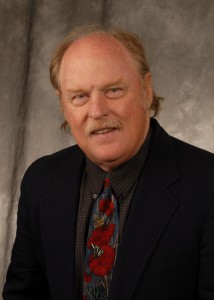 Kulhavy teaches courses in forest ecology and entomology. He has earned many titles and awards, including the 1996-97 Regents Professor designation and the distinguished Carl A. Schenck Award bestowed by the Society of American Foresters. Kulhavy, also known as “Dr. Bug,” developed an educational program to bring entomology to elementary and secondary schools. He plans to use the professorship to continue this work and to help put on the 40th East Texas Forest Entomology Seminar.
Kulhavy has published two fine art books. He worked with artist Charles Jones, director of SFA’s Lanana Creek Press, to publish his second book, “Forest Insect Alphabet,” a collection of color woodprints assigned to letters of the alphabet and corresponding insects. Kulhavy plans to work with Jones again for his third book about pollinators.
He earned a bachelor’s degree in zoology from San Diego State University and both a master’s degree in forest entomology and doctoral degree in forest sciences entomology pathology from the University of Idaho. He traveled to Colorado in March to present a paper on his plans for this professorship at the University Education in Natural Resources Conference.
The Joe C. Denman Distinguished Professorship was created in 2000 to honor Joe C. Denman. Denman graduated from Lufkin High School in 1942, served as a pilot in the U.S. Navy during World War II and graduated from Texas A&M before working for Temple Industries. He started out as assistant to the sawmill superintendent and retired as president and CEO of the company in 1988.
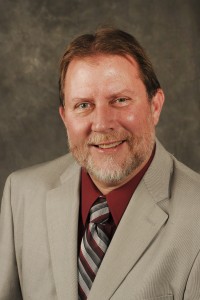 Oswald teaches courses in forest ecology, fire management, regional silviculture, fire use in land management, range management, research methods, and forest and range ecological concepts. He is the recipient of many awards and titles, including the 2012-13 Regents Professor designation and the Carl A. Schenck Award presented by the Society of American Foresters. In June of 2012, Oswald traveled to Apeldoorn, Netherlands, to give an invited lecture on fire ecology and fire management to The National Core Group on Wildfire Management, the Ministry of Security and Justice, and the VNOG.
Oswald earned a bachelor’s degree in forestry from Michigan State University, a master’s degree in fire ecology from Northern Arizona University, and a doctoral degree in forestry, wildlife and range sciences from the University of Idaho. He researches topics such as fire ecology and management, silviculture, community ecology classification, silvopasture, and agroforestry.
For more information, visit the Arthur Temple College of Forestry and Agricultures website, www.atcofa.sfasu.edu.