SFA’s Model EU team earned Best Delegation at the Midwest Model European Union competition

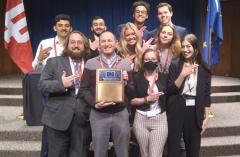
Stephen F. Austin State University's Model EU team recently earned Best Delegation at the 2022 Midwest Model European Union competition. Pictured, bottom row from left, are Thomas Martin, Dr. Steven Galatas, Hailee Mouch and Caitlyn Shrewsbury; middle row from left, are Matthew Jennings, Addison Causey, Elizabeth Cockerham and Trinity Altemeyer; and, top row from left, are Jarrett Chancellor and Alexander Gilmour.

Stephen F. Austin State University’s Model EU team recently earned Best Delegation at the 2022 Midwest Model European Union competition. Pictured, bottom row from left, are Thomas Martin, Dr. Steven Galatas, Hailee Mouch and Caitlyn Shrewsbury; middle row from left, are Matthew Jennings, Addison Causey, Elizabeth Cockerham and Trinity Altemeyer; and, top row from left, are Jarrett Chancellor and Alexander Gilmour.

Stephen F. Austin State University’s Model European Union team, which consists of nine political science majors within the Department of Government, earned Best Delegation honors at the Midwest Model European Union Competition.

Hosted by Indiana University, the MMEU competition is the second-oldest intercollegiate simulation of the European Union in North America. The purpose of the competition is to increase awareness and knowledge of the EU, its institutions and processes, according to Dr. Steven Galatas, SFA associate professor of government and Model EU faculty advisor.

“The students gained a deeper appreciation for the EU and its role in the world, as well as the importance of the United States and EU relationship in maintaining peace and stability in Europe and globally,” Galatas said.

SFA’s team represented Austria during the competition. Additionally, SFA was asked to assist the University of North Carolina and Florida International University teams who represented Sweden and Belgium, respectively.

The students received their country assignment through a lottery system. The team met regularly beginning in January to review EU legislature processes and research the country’s positions on important or critical issues, including COVID-19 and the ongoing Russia-Ukraine war.

Matthew Jennings, who’s role was foreign affairs minister in Austria, and Thomas Martin, who served as chancellor of Austria, each received first place in the competition. Caitlyn Shrewsbury also earned first place for her role as justice and home affairs minister from Austria, and Trinity Altemeyer placed third as economics and finance minister from Sweden.

“I learned how important it is for not only politicians, but also voters in the U.S. to speak to one another,” Jennings said. “Consensus and compromise make the foundation of the European Union, and learning how to understand one another is very important. It’s something I’ll carry with me into my career as a commissioned officer in the U.S. Army.”

During the competition, students participated in five legislative simulations with the goal of negotiating and bargaining between member states to pass legislation for the EU. It also allowed the students to showcase their knowledge of assigned countries’ policies and affairs.

At the end, participants in each of the five legislative bodies and the European Commission are ranked based on their negotiation and bargaining skills and participation in the debates, among other criteria.

For more information on Model EU, contact Galatas at galatasse@sfasu.edu.

By Nathan Wicker, marketing communications specialist at Stephen F. Austin State University.

Posted in All SFA, SFA News | Leave a comment

SFA’s Symphonic Band, University Band to present final spring concert

The Symphonic Band and University Band at Stephen F. Austin State University will perform “a homage to the heavens” during the ensembles’ final spring concert at 7:30 p.m. Tuesday, April 19, in Cole Concert Hall on the SFA campus.

The program, titled “Out of this World,” will feature compositions associated with outer space and the heavens, including “Shared Space” by Ivan Trevino; “We Seven” by Derek Jenkins; and “Sunshine” by Katahj Copley, all performed by the Symphonic Band, conducted by Dr. Chris Kaatz, assistant director of bands at SFA.

The program opens with the University Band performing “Into the Clouds!” by Richard Saucedo; “Darklands March” by Randall Standridge; “Lullaby to the Moon” by Brian Balmages; and Suite from “The Planets” by Gustav Holst, arranged by Johnnie Vinson, all conducted by graduate conductors Abbigail Ramsey and Christina Colley.

Saucedo’s enthusiastic “Into the Clouds!” is a “rousing imagining of the joys of a pilot in flight,” explains Kaatz. In Saucedo’s preface to the score, the composer elaborates that, “There’s nothing like the experience of flight, except possibly the experience of music, and I hope the enthusiasm of both can be found in this piece.”

Vinson’s arrangement of Holst’s “The Planets” features some of the most beloved moments from the composer’s orchestra masterwork, including the lush “Jupiter” chorale and the war-like march from the “Mars” movement, according to Kaatz.

The Symphonic Band opens the second half with an unconducted percussion ensemble piece entitled “Shared Space.” Commissioned by the McCallum High School Percussion Ensemble for its 2015 PASIC showcase, Trevino’s “Shared Space” for seven percussionists explores the idea of the close community that musicians often share. “This is embodied in the lush, interlocking motives played by the ensemble members and the regularly shared instruments throughout the piece with as many as five players on one instrument at a time,” Kaatz said.

Ramsey will guest conduct the Symphonic Band’s performance of Olivia Kieffer’s “…and then the Universe Exploded.” “This exciting post-minimalist work unfolds as a gradual layer of simple rhythmic textures to create a lush, intricate tapestry of grooves,” according to Kaatz.

Jenkins’ “We Seven” draws its title from the book of the same name co-authored by the Mercury Seven, the first U.S. astronauts to fly missions during the “Space Race” of the late ’50s and early ’60s. Jenkins draws the musical material from two main sources: musical cryptograms crafted from the names of the seven astronauts and the famous aria “Un bel dì vedremo (One fine day)” from Giacomo Puccini’s “Madame Butterfly,” a favorite opera of members of the Mercury Seven.

Closing the concert is Copley’s “Sunshine.” Kaatz describes the composer as a “rising star” in the compositional world, with his works receiving performances by ensembles such as the Cavaliers Brass, Carroll Symphony Orchestra and the Atlanta Symphony Orchestra in his brief five-year compositional career. Despite his young age of 24, Copley has written more than 100 compositions. “Sunshine” is dedicated to the composer’s close friend who helped him out of a dark period in his life. Programmatically, Copley describes the work as “an ode to the sun and the shades it beams throughout the world.”

“This colorfully optimistic work brings the program’s homage to the heavens to an exciting conclusion,” Kaatz said.

Tickets are $8 for adults, $6 for seniors and $3 for students and youth. To purchase tickets, call the SFA Fine Arts Box Office at (936) 468-6407 or visit finearts.sfasu.edu. For additional information, contact the SFA School of Music at (936) 468-4602.

Posted in All SFA, SFA News | Leave a comment

SFA’s Jacks of Steel to perform music of Trinidad, Tobago

The Jacks of Steel at Stephen F. Austin Stage University will present the traditional soca and calypso music of Trinidad and Tobago, along with versions of rock and pop songs with an island twist, when the student ensemble performs at 6 p.m. Monday, April 18, in Cole Concert Hall on the SFA campus.

The spring concert will feature steel band favorites “Soca Pressure” and “Rant and Rave,” as well as “some popular songs that will be sure to make you sing along,” according to Dr. James Vilseck, SFA adjunct music faculty member and director of the Jacks of Steel. Soca stands for “soul of calypso.”

“An exciting detail about the concert are two original arrangements composed for the ensemble, including one by SFA student Lauren Dean and one by myself,” Vilseck explained. “I was very excited to help Lauren realize her arrangement, and she did an excellent job in preparing the work for the ensemble.”

The steel band concert experience can be a little different than a “normal” concert, Vilseck said. “If the audience wants to dance along with the music, we heavily encourage it! In the past we’ve brought out the limbo stick for both the members and the audience. We want the audience to have as much fun as we are on the stage!

“Come on out and join us as we celebrate the music of Trinidad and Tobago in this fun night of music,” he added.

Tickets are $8 for adults, $6 for seniors and $3 for students and youth. To purchase tickets, call the SFA Fine Arts Box Office at (936) 468-6407 or visit finearts.sfasu.edu. For additional information, contact the SFA School of Music at (936) 468-4602.

Posted in All SFA, SFA News | Leave a comment

Change in SFA presidency

President Scott Gordon and the university have mutually agreed that it is in the best interest of both parties for the employment relationship to end. The Board has appointed Dr. Steve Westbrook to serve as SFA’s interim president until a permanent president assumes the office.

The Board of Regents wishes to thank Dr. Gordon for his services and to acknowledge the accomplishments of his administration, including but not limited to, the University’s success in navigating the disruptions of the coronavirus pandemic, its establishment of a Distinguished High School program, its progress towards the $100 Million comprehensive capital campaign, its focus on engaging alumni and its enhanced relations with community colleges and with both local and state businesses and political leaders.

SFA’s new interim president, Dr. Steve Westbrook, was first employed by the university in 1981, served as vice president for university affairs from 2007 to 2020 and was the university’s interim president following the death of former president Baker Pattillo until Dr. Gordon’s installation as university president. Since his retirement, Dr. Westbrook has continued to serve as an adjunct faculty member and in 2021 was designated by the Board as Vice President for University Affairs Emeritus. He holds bachelor’s and master’s degrees from SFA and earned a doctorate in higher education leadership from Texas A&M Commerce.

Posted in All SFA, SFA News | Leave a comment

April 10, 2022: NPD Crime Report

NPD Crime Report

This is the report from the Nacogdoches County Jail that lists the arrests made from 6 a.m. of the previous day to 6 a.m. of the listed day.

This page may take a moment to load

If you are having trouble loading the mugshots please try using a different internet browser

Click Here to load a separate PDF file

Posted in All Police, NPD Crime Log | Leave a comment

April 10, 2022: Nacogdoches Sheriff’s Crime Log

This is the report from the Nacogdoches County Jail that lists the arrests made from 6 a.m. of the previous day to 6 a.m. of the listed day.

This page may take a moment to load

Click Here to load a separate PDF file

Posted in All Police, SO Crime Log | Leave a comment

April 10, 2022: Nacogdoches County Booking Report

This is the report from the Nacogdoches County Jail that lists the arrests made from 6 a.m. of the previous day to 6 a.m. of the listed day.

This page may take a moment to load

If you are having trouble loading the mugshots please try using a different internet browser

Click Here to load a separate PDF file

Posted in All Police, Booking | Leave a comment

NACOGDOCHES POLICE DEPARTMENT PASSES TEXAS LAW ENFORCEMENT BEST PRACTICES INSPECTION

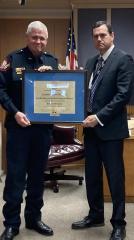
tpcaThe Nacogdoches Police Department has successfully completed the inspection by the Texas Police Chiefs Association as part of their participation with the TPCA Accreditation Program. NPD was the 24th agency in the State of Texas to become recognized as following Texas Law Enforcement Best Practices on February 11, 2010. Since that time NPD has maintained this accreditation by successfully passing each inspection. Currently there are approximately 175 TPCA recognized agencies out of 2,720 total agencies in the state of Texas.

Posted in All Police, Police News | Leave a comment

SFA’s presentation of “The Taming of the Shrew” continues through Saturday

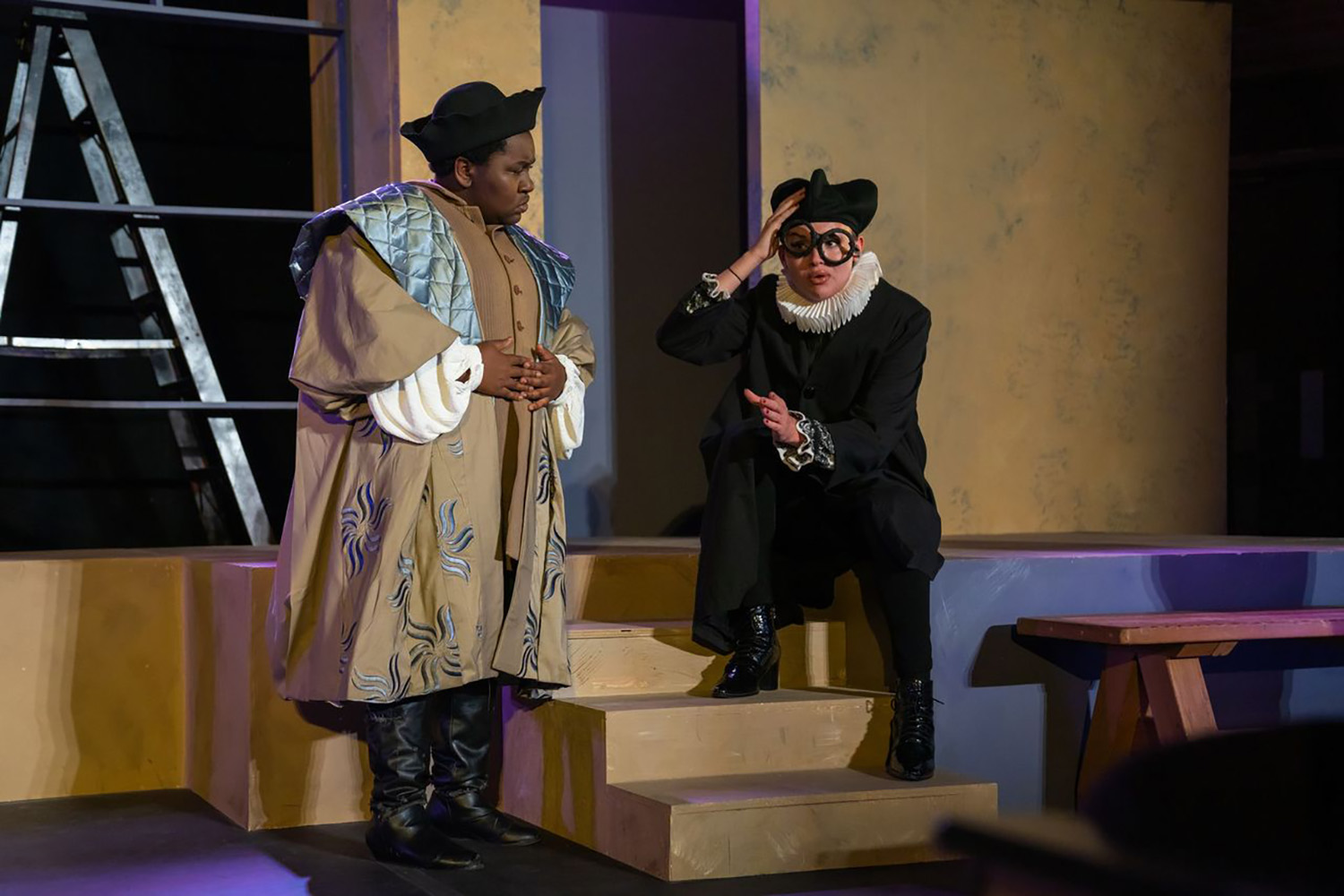
Taming cutline 2bap horThe School of Theatre at Stephen F. Austin State University will present William Shakespeare’s “The Taming of the Shrew” at 7:30 nightly through Saturday, April 9, in Kennedy Auditorium on the SFA campus. SFA theatre students, from left, Jaz’Lyn Lewis of Longview and Mariano Aguirre of Little Elm perform in a scene from the play. General ticket prices are: $15, adult; $10, senior (62+); $7.50, SFA faculty/staff; $7.50, youth; $5, student. Purchase tickets at boxoffice.sfasu.edu or call (936) 468-6407. For questions about the play, contact the School of Theatre at (936) 468-4003.

Posted in All SFA, SFA News | Leave a comment

SFA forestry graduate students contribute to critical avian conservation research

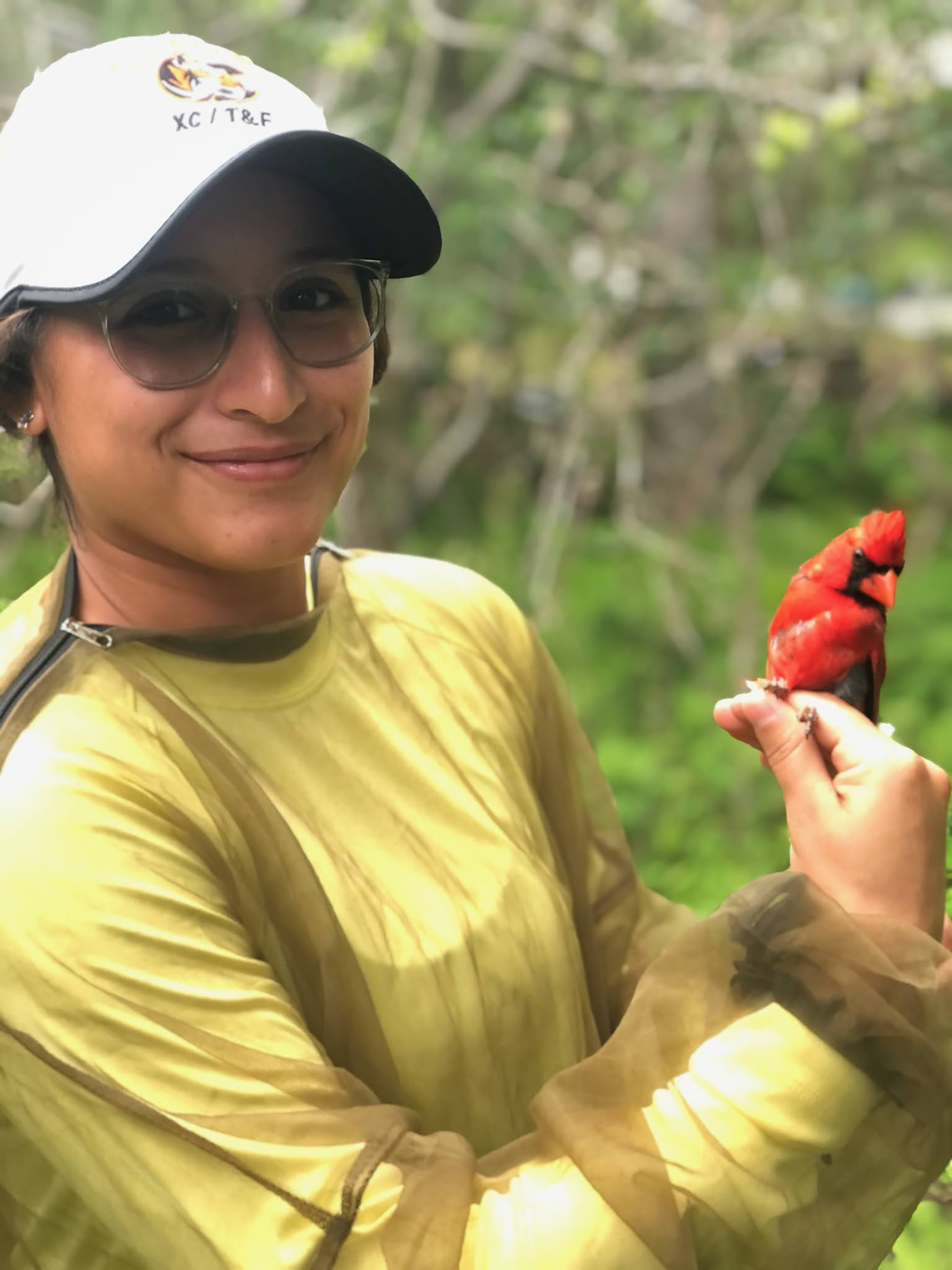
Current research indicates a significant loss in avian abundance and diversity during the past 50 years in North America. With this in mind, three Stephen F. Austin State University forestry graduate students are conducting research across Texas and the Mississippi alluvial valley to advance avian conservation practices and augment available scientific data. Pictured is Alejandra Martinez, SFA forestry graduate student, holding a Northern cardinal captured during her field work.

Current research indicates a significant loss in avian abundance and diversity during the past 50 years in North America. With this in mind, three Stephen F. Austin State University forestry graduate students are conducting research across Texas and the Mississippi alluvial valley to advance avian conservation practices and augment available scientific data. Pictured is Alejandra Martinez, SFA forestry graduate student, holding a Northern cardinal captured during her field work.

The arrival of spring in Texas heralds the return of diverse migratory species, such as the ruby-throated hummingbird, purple martin, chuck-will’s-widow and yellow-billed cuckoo, just to name a few. Located within North America’s central migratory flyway, Texas provides a diversity of habitat critical to the survival of millions of birds on their biennial journey to breeding or wintering habitats.

As welcome as these species are to the state, Texas is not immune to data indicating a significant loss in avian abundance and diversity during the past 50 years.

“I know for me, not just being a student, but also being a birder for about 14 years, I’ve noticed a decline in birds,” said Eamonn Thurmond, who is pursuing a Master of Science in Forestry at Stephen F. Austin State University. “When the 2019 Rosenburg paper came out, it seemed par for the course. It didn’t surprise us, but it was very much disappointing.”

The 2019 paper Thurmond is referring to was a collaborative research effort across nine separate universities, governmental agencies and organizations that found an approximate net loss of roughly 3 billion birds since 1970. Currently, Thurmond is one of three SFA forestry graduate students conducting research to continue to shed light on current avian population trends, as well as land management practices that benefit these species.

Thanks to a grant from the National Fish and Wildlife Foundation, Thurmond, under the direction of Dr. Rebecca Kidd, SFA associate professor of forestry, will analyze 150 study sites within bottomland hardwood forests across Louisiana, Arkansas and Mississippi. These sites, located within the Mississippi alluvial valley, are part of a national effort to restore bottomland hardwood forest ecosystems that have been drastically altered or lost due to anthropogenic, or human-based activities.

Through initiatives such as the Wetland Reserve Program, a voluntary program assisting landowners in protecting, restoring and enhancing wetlands and riverine ecosystems, progress has been made in restoring critical bottomland hardwood forest habitat. On these sites, active forest management practices, such as invasive species control, thinning and regeneration harvests, complement naturally occurring disturbances, such as flooding and falling trees.

“The goal of this research is to see how avian communities are changing or responding over time to the intensity of forest management from the early successional stage to the ideal, mature forest stage,” Thurmond said.

In order to document these changes, Thurmond will deploy automated sound recording units at 75 different forest sites for two summers. These waterproof, compact recording units can be programmed to record at specific times of the day for set lengths of time and later analyzed to discern which species are utilizing the study site.

“On one of my recordings, I started laughing because I got 11 different species vocalizing within the first 20 seconds of the recording,” Thurmond said with a smile. “The fact you can get 11 species within that short time should emphasize how many birds are there, and it’s a good metric for looking at communities present.”

Thurmond explained that complexity within the vertical forest structure is typically best for forest birds because it provides a variety of resources for multiple species. His findings will help guide foresters in making future management decisions to benefit songbirds within these restored bottomland forests.

Closer to home, forestry graduate student Liam Wolff is investigating how forest conditions affect an avian species recognized by the Texas Parks and Wildlife Department as a species of conservation concern. His research, directed by Dr. I-Kuai Hung, Lacy H. Hunt Professor of geospatial sciences at SFA, is supported in part by the State and Tribal Wildlife Grants Program.

Bachman’s sparrows are habitat specialists that rely on open pine woodlands with grassy understories like those historically found across East Texas. According to the Cornell Lab of Ornithology, populations of this small, brown songbird have declined by 76% during a span of 44 years. This is due in large part to land conversion, fire suppression and other alterations to native forest composition.

“The strongest argument for the protection of this species is that it is a bioindicator and occurs in the same habitat as the endangered red-cockaded woodpecker,” Wolff said. “So, if you’re conserving this species, there’s a whole other slew of species you’re also protecting — and not just birds. There are some plants associated with these habitat types, and in Eastern populations, you have the federally threatened gopher tortoises and Louisiana pine snakes.”

Wolff’s study sites are located across public and private lands throughout the post oak savannah and piney woods ecoregions of East Texas.

During multiple seasons, Wolff will examine the spatial and temporal factors that influence the occupancy, phenology and detection of Bachman’s sparrows in East Texas. This includes canopy cover, forest basal area, percent ground cover of grasses, leaf litter and more.

“These data can inform agencies and land managers on habitat preferences of Bachman’s sparrows, as well as occupancy and distribution of this species of greatest conservation need in Texas,” Wolff said. “We’re also looking at a regional-scale predictor of how far a surveyed plot is from a source population. What that can imply is whether habitat fragmentation is affecting whether or not these birds are able to move between certain areas.”

For example, Wolff said there are a number of restored habitats in East Texas capable of supporting the Bachman’s sparrow, but the species has not been detected.

Automated sound recording units are again key to detecting the presence or absence of the Bachman’s sparrows. Thankfully, Wolff and other students have access to software to assist in sorting this massive amount of audio.

“In addition to the audio, the software represents sound visually,” Wolff said. “If you familiarize yourself with the spectrogram signature of your species, you can just scan through and visually look for that signature. Fortunately, the Bachman’s sparrow signature is pretty unique.”

At the Welder Wildlife Refuge in South Texas, forestry graduate student Alejandra Martinez will analyze six years of data collected over a 12-year period through a MAPS station within a riparian woodland to determine occupancy and population trends of birds.

“The acronym stands for Monitoring Avian Productivity and Survivorship,” Martinez explained. “MAPS is one of the first resources used to collect long-term breeding data on the land bird populations of North America, including productivity indices.”

There are more than 1,300 MAPS stations across North America, and data collected at each of these stations is publicly available.

During a span of three years, Martinez, under the direction of Dr. Jessica Glasscock, SFA assistant professor of forest wildlife management, will gather comprehensive data from birds collected through mist nets as outlined by the established MAPS protocol. She will then compare her data to previous years to determine if there are any population trends or shifts occurring.

She notes that initial findings indicate a decline in common species, such as the Northern cardinal, known for its bright red feathers and expansive range across the United States.

“We ran a species rank abundance curve and ranked the top three most abundant species by year, and it was really interesting to see that the most abundant species someone can think of — this generalist species — has declined at this local scale,” Martinez said.

Additionally, Martinez will compare the effectiveness of automated sound recording units and established MAPS protocols in determining occupancy and time of detectability.

“We want to see if the recording units are more efficient because we’re not going to catch every single bird that may be present,” Martinez said. “When we’re not running our nets and collecting birds, we’re supposed to be listening to document species flying over. Hopefully, with the recording units, we can pick up a more complete population or complete community of avians in this riparian corridor.”

For more information on this and other research occurring through the Arthur Temple College of Forestry and Agriculture, visit sfasu.edu/atcofa.

Story by Sarah Fuller, outreach coordinator for Stephen F. Austin State University’s Arthur Temple College of Forestry and Agriculture. Contact information: (936) 468-1185 or fullersa@sfasu.edu.
Posted in All SFA, SFA News | Leave a comment